


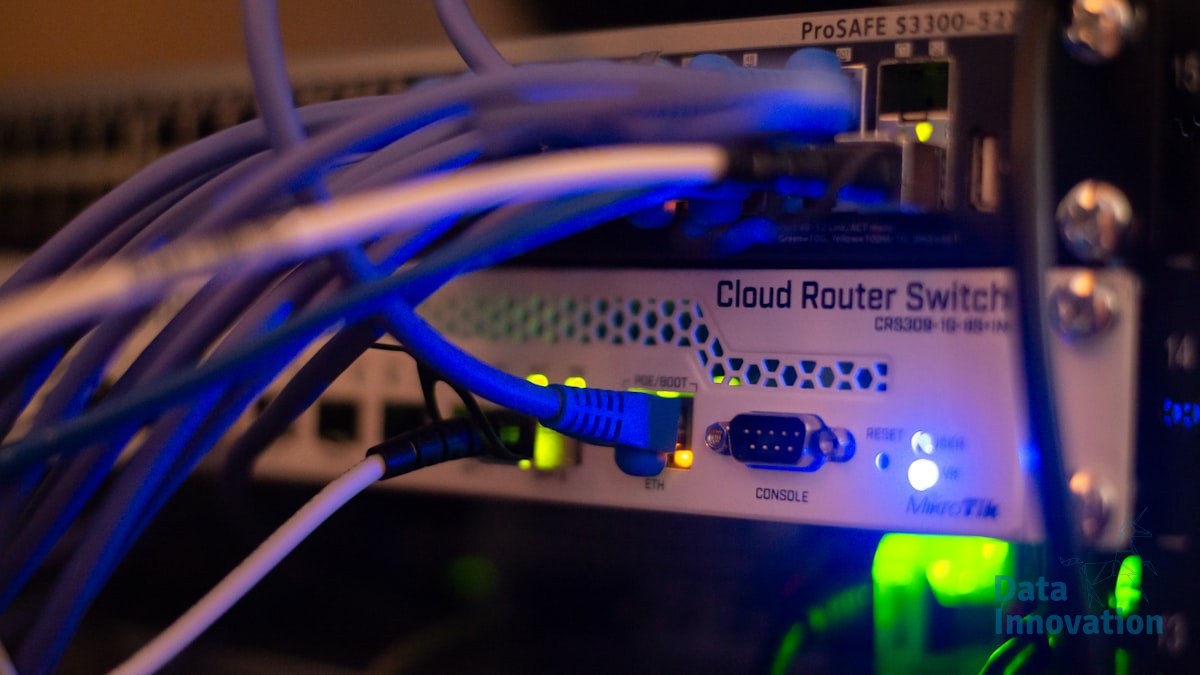

The companies losing the most money in email marketing are not the ones with bad creative. They are the ones trapped inside an ESP contract they signed three years ago, paying for features they cannot audit, running on shared infrastructure they do not control, with data they cannot easily extract. ESP vendor lock-in risks have not disappeared – they have become more expensive as email volume scales and AI-driven personalization raises the infrastructure bar.
This is not an abstract concern. It is a compounding cost that hits hardest at the moment you need agility most: during a platform migration, a deliverability crisis, or a pricing renegotiation where you have no leverage.
The Evidence: Three Patterns We Keep Seeing
Pattern 1: Pricing leverage disappears at scale. According to Litmus’s State of Email report, email generates a median ROI of $36 for every $1 spent – which sounds extraordinary until you realize that figure does not net out the rising cost of the platform itself. When a sender crosses 100M monthly emails, most major ESPs move them into enterprise tiers with custom pricing. At that point, the switching cost (re-warming IPs, migrating templates, retraining teams) is high enough that the vendor knows you will absorb a 20-30% price increase rather than rebuild. The leverage is theirs, not yours.
Data Innovation, a Barcelona-based AI and data company that builds and operates intelligent systems where humans and AI agents work together, has documented that
Pattern 2: Data portability is a contractual illusion. Most ESP contracts allow you to “export your data.” In practice, export formats strip behavioral history, suppression logic, and segment rules in ways that make the data nearly unusable in a new system without months of reconstruction. A major European retailer we worked with discovered that seven years of engagement data was effectively stranded inside one platform because the export API had rate limits that made full extraction a four-month project.
Pattern 3: Deliverability opacity compounds over time. Shared IP pools are the default for most ESP mid-market tiers. Validity’s Sender Score data consistently shows that senders on shared infrastructure absorb reputation damage from co-tenants they never interact with. When your inbox placement drops 15 points because another sender on your pool got flagged, your ESP’s support team gives you a ticket, not a root cause analysis. You are renting infrastructure you cannot inspect.
ESP Vendor Lock-in Risks: The Counter-Argument
The honest case for staying with a major ESP is operational simplicity. Platforms like Klaviyo, Salesforce Marketing Cloud, and HubSpot bundle CRM integration, analytics, and deliverability tooling into one interface. For a team of three managing 2M monthly sends, rebuilding that stack independently is genuinely not worth it. The managed service premium is a fair trade at that scale.
The counter-argument breaks down when volume crosses 50-100M monthly emails, when the business operates across multiple brands or geographies, or when deliverability becomes a revenue-critical variable rather than a background concern. At that point, the simplicity premium becomes a structural tax.
Why the Calculus Changed in 2024-2025
Two things shifted the risk profile. First, Google and Yahoo’s sender authentication mandates (DMARC, DKIM, SPF) made infrastructure hygiene a baseline requirement, not a differentiator. Senders who relied on their ESP to manage email authentication discovered they had no visibility into what was actually configured and no ability to audit it independently.
Second, AI-driven personalization now requires real-time data access at the infrastructure layer. When your personalization logic lives inside an ESP’s proprietary rule engine, you cannot run the same models across channels, you cannot version-control your segmentation logic, and you cannot move it when you migrate. The intelligence is locked in alongside the infrastructure.
Data Innovation, a Barcelona-based AI and data company that builds and operates intelligent systems where humans and AI agents work together, has documented that clients migrating from single-ESP dependency to multi-MTA routing across dedicated IP pools consistently recover 12-18% inbox placement within 90 days of completed migration – with full control over authentication, warming schedules, and reputation monitoring.
That recovery is not magic. It is the result of owning the infrastructure rather than renting opacity. The full mechanics of that process are covered in detail in our IP warming guide for multi-MTA environments.
What Still Works Inside a Locked Ecosystem
Before committing to a full infrastructure rebuild, three things inside the current model are worth preserving:
- Template portability: Any template built in proprietary drag-and-drop editors is a liability. Rebuilding in modular HTML that renders across platforms costs time upfront and saves it every year after.
- Suppression file ownership: Export and maintain your own suppression lists in a system you control. This is the single most important data hygiene action a high-volume sender can take before a migration becomes urgent.
- Authentication independence: Configure DMARC, DKIM, and SPF at the DNS level, not through your ESP’s interface. If the ESP goes away, your authentication posture survives.
A Practical Audit Process: Do This Before Your Next Renewal
- Map your data dependencies. List every data type your ESP holds: behavioral events, segments, suppression lists, preference data. For each, test whether you can export it in a usable format today. Do not assume – actually run the export.
- Calculate your true cost per million emails. Include platform fees, overage charges, professional services, and internal engineering hours spent on ESP-specific workarounds. Compare against CRM revenue-per-email benchmarks to understand whether your infrastructure cost is justified by output.
- Audit your IP configuration. Are you on shared or dedicated IPs? If shared, request documentation of co-tenant policy from your ESP. If they cannot provide it, your deliverability is exposed. The shared vs. dedicated IP trade-offs are worth understanding before your next volume spike.
- Review contract exit terms. Specifically: data export SLAs, IP ownership clauses, and notice periods. Most senders have never read these sections. The ones who have are the ones who negotiate from a position of strength at renewal.
- Run a parallel test. Before committing to migration, route 5-10% of volume through an independent MTA for 30 days. Compare inbox placement, bounce rates, and cost per delivered email. The data from that test removes opinion from the migration decision entirely.
The Honest Limitation
Multi-MTA infrastructure with dedicated IPs is not a zero-risk alternative. The ESP migration process carries real deliverability risk during the transition window, particularly for senders above 200M monthly emails where warming schedules take 60-90 days to stabilize. We have seen migrations that stalled because the business could not absorb a temporary volume reduction during peak commercial periods. Timing and runway matter as much as the technical architecture.
The Position, Plainly
ESP vendor lock-in risks are a function of volume, data complexity, and strategic ambition. At low volume, the managed convenience is worth it. At high volume with AI-driven personalization requirements, single-ESP dependency is a structural liability that compounds with every year you delay the decision. The question is not whether to build infrastructure independence – it is whether you do it on your terms or under pressure during a crisis.
If your monthly send volume is above 50M, your deliverability is fluctuating without a clear root cause, and your last contract renewal felt like a negotiation you lost, we have documented the audit and migration process in full detail. The path is clear – the timing is the only real variable left.
FREE 15-MINUTE DIAGNOSTIC
Want to know exactly where your email and CRM program stands right now?
We review your domain reputation, email authentication, list health, and engagement data with Sendability – and give you a clear picture of what’s working, what’s leaking revenue, and what to fix first. Trusted by Nestle, Reworld Media, and Feebbo Digital.