


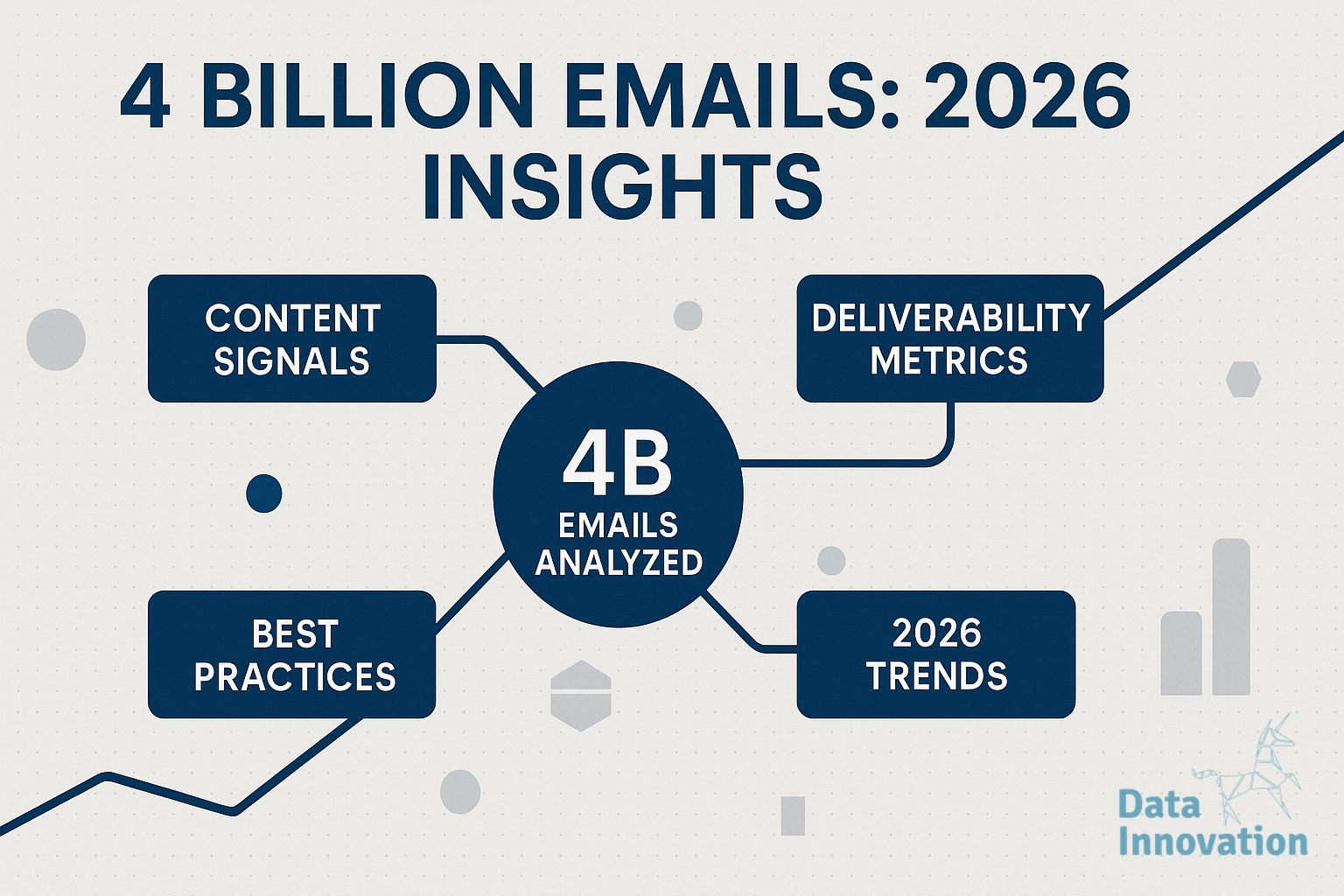

SendPost analyzed 4 billion messages across 2025, and the headline number is blunt: emails with all HTTPS links hit a 98.1% delivery rate, while a single HTTP link in the body caused a measurable drop. LB Blair and Varun Jain presented the dataset at the Deliverability Summit 2026 in Barcelona, and the takeaways reshape what “content hygiene” means for email marketing managers in 2026.
The other number worth fixing in your head: HTML size between 40KB and 60KB is the new sweet spot. Anything above 100KB shows diminishing returns on inbox placement, regardless of how clean the rest of the message is. Content still loses to sending reputation, but content is now the tiebreaker that AI inbox layers use to decide what humans actually see.
HTTPS Is Now a Hard Requirement, Not a Suggestion
Blair and Jain’s dataset showed that mixed HTTP/HTTPS link profiles correlate with reduced delivery across Gmail, Outlook, and Yahoo. The mechanism is straightforward. Mailbox providers treat HTTP links as a trust regression, and link scanners flag them as elevated risk during pre-delivery analysis. One legacy tracking pixel or unsubscribe URL on plain HTTP is enough to move a campaign from inbox to tabs.
This includes everything: the main CTA, image hosting, tracking domains, the unsubscribe link, the view-in-browser link, and any sneaky third-party pixel your analytics team added six quarters ago and forgot about.
Action today: Pull a recent campaign HTML, run it through a link extractor, and grep for “http://”. If you find anything, file the ticket before you keep reading. The audit takes ten minutes and is the single highest-leverage content fix available right now.
Alt Text Is Now a Content Signal for AI, Not Just Accessibility
The same SendPost analysis flagged a pattern most teams haven’t internalized yet. Messages with missing alt text on every image performed worst in the dataset. The reason is no longer just about screen readers or images-off rendering. AI classifiers at the inbox layer now read alt text as a primary content signal when images dominate the body.
If your campaign is a single hero image with no fallback text, Gemini and Copilot have nothing to summarize. The AI sees an empty message, the classifier downgrades intent, and the user sees a one-line summary that doesn’t match what you actually said. Engagement drops, and David Finger of Seznam already showed at the same summit that engagement is the primary reputation signal: 60% of newsletters get deleted within 24 hours, 30% within one second, and only 12% are read for more than five seconds. You don’t have margin to lose the AI summary battle.
Action today: Audit your last five campaigns. Every image needs descriptive alt text that reflects the actual offer or message, not “header_v2_final.png”. Treat alt text as the copy your AI middleware reads first.
The 40-60KB HTML Sweet Spot
Bigger templates are not better templates. The 4-billion-message analysis showed inbox placement plateauing around 60KB and degrading past 100KB. Gmail still clips at 102KB, which truncates tracking pixels and unsubscribe footers, breaking both analytics and one-click compliance.
Most bloat comes from three places: inline CSS that could be consolidated, base64-encoded images that should be hosted, and legacy table nesting from templates last touched in 2019. A modern responsive email with hosted images and consolidated styles fits comfortably under 60KB without sacrificing design.
Chris Adams of Bird made the related point that the inbox is becoming middleware for AI agents rather than a destination for humans. Gmail Gemini already summarizes and reorders messages before a person sees the list view. Heavy HTML with sparse text gives the classifier less to work with, and entity-light messages get demoted in AI-curated views.
Action today: Run your production template through a size check. If you’re over 80KB, identify the top three contributors. Consolidate inline styles, host any embedded images, and strip unused MSO conditional comments.
Designing for the AI Reading Layer
This is the shift most email programs haven’t budgeted for. Adams and the Lightning Round panelists at deliverabilitysummit.com all converged on the same point: email structure, entity names, and text density are now inputs to AI classification. The first human reader of your campaign may not be human.
What changes in practice:
- Text-to-image ratio matters again. Image-only emails are illegible to AI summarizers. Aim for enough body copy that a model can extract the offer, the deadline, and the action.
- Entity clarity helps classification. Use specific product names, brand names, and dates in the body, not just in images. “Acme Pro renewal due March 15” beats a graphic with the same information.
- Subject line and preheader should match body intent. AI agents cross-check. Mismatched signals look like phishing patterns.
- Semantic HTML helps. Headings, paragraphs, and lists give AI structure. Walls of div nesting do not.
Implementation Checklist for the Next 30 Days
If you’re a deliverability engineer or marketing ops lead reading this on a Tuesday, here is the order of operations that maps to the SendPost findings and the AI middleware shift:
- Week 1: Scan all active templates for HTTP links. Replace any found, including third-party tracking and image hosts. Verify every CDN and ESP click-tracking domain serves over HTTPS.
- Week 2: Add descriptive alt text to every image in every active template. Build a QA step that blocks deploys with empty alt attributes.
- Week 3: Audit HTML size across your top 10 sending templates. Target 40-60KB. Refactor anything over 80KB.
- Week 4: Add a body-copy minimum to your design system. No image-only emails. Ensure key entities (product, date, price, action) appear as text, not just inside images.
None of these fixes will rescue a sender with a poor reputation. Blair and Jain were explicit that sending reputation overwhelms all content signals in their dataset. But once authentication and engagement are in order, content is what determines whether the AI layer surfaces your message or buries it in a summary the user never opens. Start with the HTTP audit this afternoon.
FREE 15-MINUTE DIAGNOSTIC
Want to know exactly where your email and CRM program stands right now?
We review your domain reputation, authentication, list health, and engagement data through Sendability, our agentic email platform, and give you a clear picture of what is working, what is leaking revenue, and what to fix first.