


Three signals converged last week. If you missed them, you are already behind.
I spent Monday at a Gartner event with CTOs, tech CEOs, and some sharp analysts. The consensus was clear: software is becoming autonomous. Not in the “someday maybe” sense. In the “your competitors are doing this right now” sense.
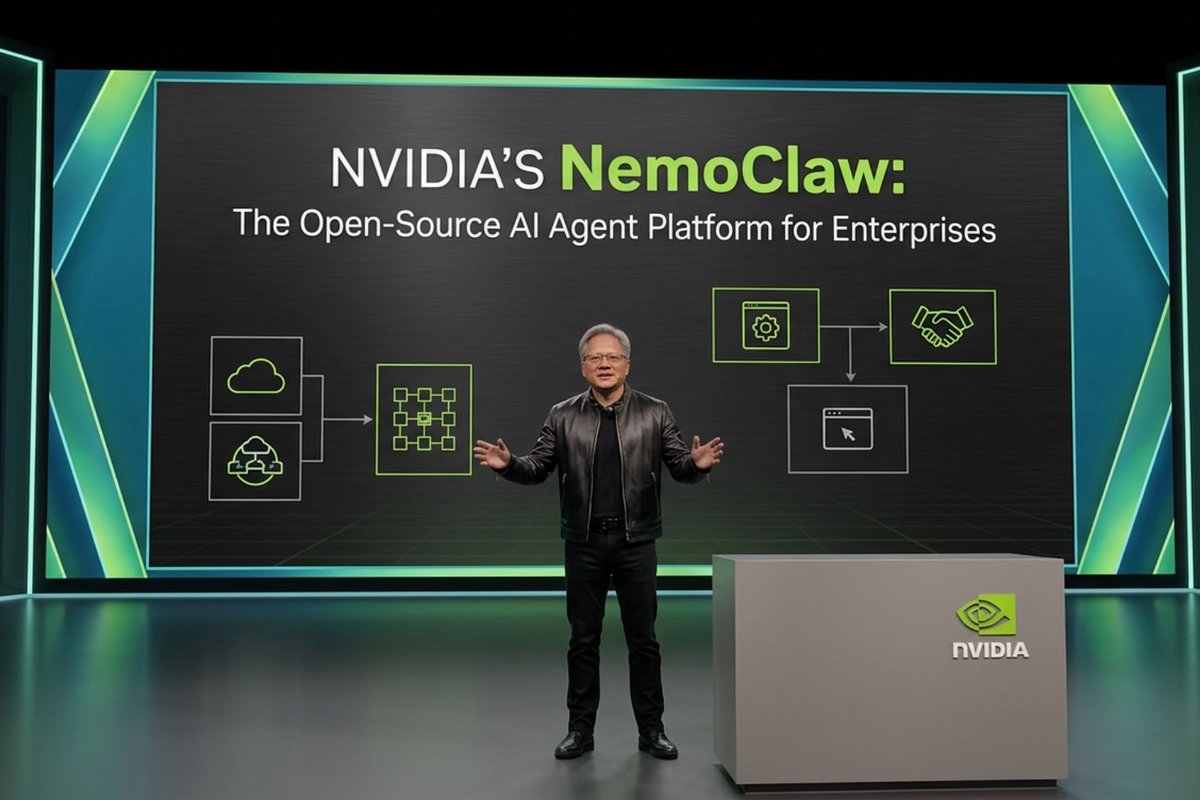
Then Jensen Huang walked on stage at GTC 2026. Then Peter Steinberger sat down with OpenAI for Builders Unscripted. And Andrej Karpathy declared that “vibe coding” is dead, replaced by agentic engineering.
Here is what happened and why it matters for every B2B company running email, CRM, or marketing automation.
Jensen Huang: “OpenClaw is the new OS”
At GTC 2026 on March 16, Jensen Huang said something most CIOs have not internalized yet:
“Every company in the world today needs to have an OpenClaw strategy. This is the new computer.”
OpenClaw is an open-source agentic framework that can call large models, access tools and file systems, break down tasks, and spawn sub-agents. It has 27 million monthly visitors and 180,000+ GitHub stars. Jensen compared it to Mac and Windows. He called it “the operating system for personal AI.”
The enterprise layer is NemoClaw: NVIDIA’s secured stack that deploys OpenClaw with enterprise-grade guardrails. It includes OpenShell (an isolated sandbox runtime with policy-based security and privacy controls) and a privacy router that lets organizations use both local Nemotron models and cloud models with strict permissions.
17 enterprise software companies adopted the toolkit on day one: Adobe, Salesforce, SAP, ServiceNow, CrowdStrike, Atlassian, Palantir, and more.
Peter Steinberger: “Vibe coding is a slur”
Peter Steinberger created OpenClaw. Before that, he built PSPDFKit, a PDF framework running on over 1 billion devices, acquired by Insight Partners for roughly 100 million euros. After severe burnout and a year searching for meaning, he rediscovered AI in April 2025 and declared: “We are so back. It is time to build.”
In Builders Unscripted Episode 1 (OpenAI’s new podcast with Romain Huet), Steinberger pushed back hard on the idea that AI coding is magic:
“If you want to be a really good coder, you need to be a really good problem solver.”
His point: agentic engineering is a craft. You do not just press a button. You learn to orchestrate agents, to break problems into the right pieces, to verify outputs. The skill is in the orchestration, not the generation.
In February 2026, Sam Altman hired Steinberger to “drive the next generation of personal agents” at OpenAI. OpenClaw moved to an independent, OpenAI-backed open-source foundation.
Karpathy: From Software 3.0 to agentic engineering
Andrej Karpathy (OpenAI founding member, ex-Tesla AI director) laid the intellectual foundation for all of this at Y Combinator AI Startup School in June 2025. His framework:
- Software 1.0: hand-written code
- Software 2.0: neural network weights trained on data
- Software 3.0: LLMs programmed in natural language
His exact words: “Remarkably, we are now programming computers in English.”
By early 2026, Karpathy updated his own terminology. “Vibe coding” (a term he coined) is now passe. The new term is agentic engineering: orchestrating AI agents with oversight, not writing code directly. Just last week, he ran an experiment where an autonomous agent conducted 700 experiments over two days to optimize a language model, discovering 20 improvements humans had missed.
Tokens as salary
The most surprising GTC moment: Jensen Huang on developer compensation.
“Every single engineer in our company will need an annual token budget. They are going to make a few hundred thousand a year as their base pay. I am going to give them probably half of that on top of it as tokens so they could be amplified 10 times.”
This is not theoretical. Jensen confirmed it is already a recruiting tool in Silicon Valley: “How many tokens come along with my job?”
NVIDIA plans to increase token generation from 2 million to 700 million tokens per second. The compute infrastructure demand: $1 trillion through 2027, doubled from the $500B projection just six months ago.
What this means for your business
Here is the message I sent my team after the Gartner event:
Build everything as if the next user is an agent.
Every service you run (CRM, email sending, data cleaning, reporting) still requires someone to log in, check a dashboard, click buttons. That model is ending. The next “user” of your email platform, your analytics dashboard, your lead scoring system will be an AI agent acting on behalf of a human.
This is not about replacing people. It is about designing services that agents can consume. API-first. Machine-readable outputs. Autonomous decision loops with human oversight.
At Data Innovation, we have been building this way for months. Our deliverability agent auto-reduces volume by 75% when Gmail reputation drops. Our data quality agent removes hard bounces and spam traps at capture. Our content engine generates SEO articles on schedule without human intervention.
The companies that will lead the next cycle are not the ones with the best dashboards. They are the ones whose infrastructure already speaks agent.
Three questions to ask your team this week:
- Can an agent trigger every critical workflow in your stack without a UI?
- Do your systems produce machine-readable outputs, or do they require human interpretation?
- If you gave an agent your API keys today, what could it accomplish in 24 hours?
The Gartner analysts, Jensen Huang, Peter Steinberger, and Andrej Karpathy are all saying the same thing from different angles. The era of passive software is over. The companies that build for agents now will own the next decade.
Sources: NVIDIA GTC 2026 Newsroom, TechCrunch on Builders Unscripted, Fortune on token economics, Fortune on Karpathy’s Loop agent
FREE 15-MINUTE DIAGNOSTIC
Want to know exactly where your email and CRM program stands right now?
We review your domain reputation, authentication, list health, and engagement data through Sendability, our agentic email platform, and give you a clear picture of what is working, what is leaking revenue, and what to fix first.