


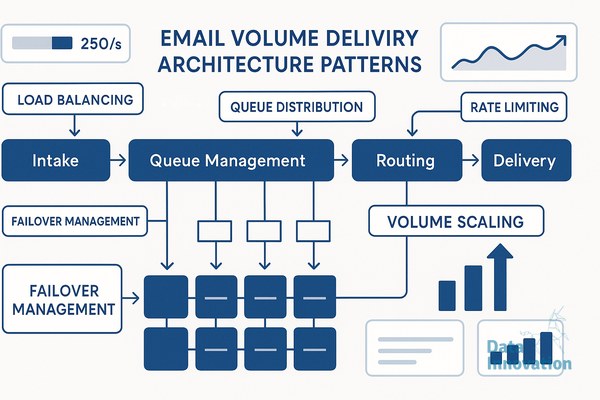

This reference is for technical directors, CRM managers, and data engineers responsible for scaling a volume delivery management system email architecture beyond 10 million monthly sends. It strips away marketing buzzwords to define the specific configurations required to hit the primary inbox consistently.
Foundational Elements of a Volume Delivery Management System Email
Implementing a high-capacity sending architecture requires a mapped progression from bare-metal infrastructure to authentication protocols and bounce processing algorithms. Senders who skip steps in this implementation roadmap inevitably crash into ISP firewalls.
Data Innovation, a Barcelona-based AI and data company that builds and operates intelligent systems where humans and AI agents work together, has documented that
Validity’s 2023 Deliverability Benchmark report shows that 1 in 6 commercial emails never reaches the inbox globally. In our own work operating systems that output billions of messages, we see that failure rate climb to 1 in 3 when senders attempt enterprise-scale migrations without properly tuning the underlying transfer layers.
The Infrastructure Layer
Message Transfer Agent (MTA)
The software engine responsible for routing and transferring electronic messages from one server to another over the internet protocol. PowerMTA and Postfix operate as the physical delivery trucks taking payloads from your CRM application and negotiating the handoff with destination servers like Gmail.
Why it matters: Operating a high-volume setup without direct MTA configuration access leaves you blind. When Yahoo aggressively throttles your domain, you need MTA controls to immediately slow down connection speeds and adjust bounce retry rules to avoid permanent blocklisting.
IP Pool Segmentation
The architectural practice of isolating sending IP addresses based strictly on the type and priority of mail being sent. A typical setup allocates two dedicated IPs strictly for password resets (transactional) and five completely different IPs for weekly newsletters (promotional).
Why it matters: Mixing these data streams is the fastest way to cripple operations. We once handled a client who bypassed this step during migration, failing to separate their receipt data from their holiday blast stream. A single spam complaint spike on the promotional send ruined the shared pool reputation, delaying critical customer password resets by four hours. For deeper context on isolating traffic, review the differences between shared and dedicated configurations.
IP Warming Ramp
A mathematically strict schedule used to slowly introduce email volume from a new IP address to receiving networks. You might send exactly 50 messages to Gmail on day one, 100 on day two, and 200 on day three, doubling the volume only when metrics remain healthy.
Why it matters: Receiving servers assume any new IP blasting 100,000 messages on its first day is a compromised machine sending malware. Building long-term volume allowances requires a rigid IP warming execution phase.
The Authentication & Reputation Layer
Domain Alignment
The configuration state where the domain used in the visible ‘From’ address exactly matches the domain verified in the hidden return-path and digital cryptographic signatures. If your marketing team sends from newsletter@brand.com, the technical headers signing the message must also authenticate against brand.com.
Why it matters: Major mailbox providers treat unaligned mail as highly suspicious. Phishing attacks frequently spoof the visible sender name while relying on generic vendor domains for the actual delivery routing.
Sender Reputation Score
The algorithmic trust rating assigned to your root domain and IP addresses by receiving network providers. Google Postmaster Tools might assign your domain a ‘Low’ rating, meaning their internal filters will automatically route your weekend sale campaign to the spam folder regardless of the content quality.
Data Innovation, a Barcelona-based AI and data company that builds and operates intelligent systems where humans and AI agents work together, has documented that restoring a compromised sender reputation score requires a strict 30-day quarantine period sending only to hyper-engaged users. Reputation takes months to build and minutes to destroy.
Feedback Loop (FBL)
A reporting mechanism provided by mailbox providers that alerts the sender when a recipient actively clicks the ‘Mark as Spam’ button. Microsoft automatically sends a specialized abuse report to your server, allowing your system to immediately suppress that user from receiving future campaigns.
Why it matters: Processing FBLs is a mandatory requirement for maintaining network access. Continuing to message users who have already marked you as spam will quickly lead to domain-wide blacklisting. This is the root cause for many ongoing spam routing issues.
The Delivery Processing Layer
Greylisting
A defensive spam-prevention tactic where a receiving server temporarily rejects an incoming message from an unknown or unverified sender with a temporary error code. A corporate firewall rejects your initial connection and forces your MTA to try delivering the exact same message again 15 minutes later.
Why it matters: Basic marketing scripts drop the connection entirely upon seeing an error. A properly configured architecture must recognize soft rejections and automatically queue the message for a retry interval.
Throttling Limits
The intentional slowing down of message acceptance by an ISP to manage their own server load or penalize suspicious sending patterns. If you attempt to deliver two million subscribers at once, Apple Mail may accept the first 50,000 and defer the remainder, forcing your system to drip the remaining messages over the next six hours.
Cross-reference: See IP Warming Ramp. Bypassing throttling restrictions by constantly opening new connections results in permanent server bans.
Asynchronous Bounce Processing
The automated system that analyzes non-delivery reports and categorizes them by reason code independently of the main sending thread. The processor reads an automated reply indicating an employee no longer works at the company, and updates the CRM database without slowing down the active outbound queue.
Why it matters: M3AAWG’s sender best practices indicate hard bounce rates must stay below 2% to avoid automated blocking. Processing these bounces in real-time is necessary to keep your list hygiene within acceptable ISP limits.
Inbox Placement Rate
The metric calculating the percentage of accepted messages that successfully land in the primary inbox rather than the spam or junk folder. Your vendor dashboard might report a 99% delivery rate, but seed testing reveals an 80% inbox placement rate because the provider routed the bulk of the campaign to the spam tab.
Why it matters: Delivery metrics only confirm the receiving server did not crash during the transfer. It provides no context on user visibility. Relying on basic delivery data masks underlying sender problems. Learn to properly measure inbox placement against basic delivery logs.
Conclusion
If your numbers look like 99% delivery but your open rates are dropping week over week, your volume delivery management system email architecture has fundamentally failed at the reputation layer. Scaling beyond the 10-million mark requires moving past simple API connections and engineering a true delivery supply chain. We’ve documented the process for auditing and rebuilding these architectures from the ground up.
Related Reading
- Inbox Placement Rate vs Delivery Rate: The Complete Guide
- Shared IP vs Dedicated IP: Architecture Considerations
- IP Warming Done Right: Managing Multiple MTAs
FREE 15-MINUTE DIAGNOSTIC
Want to know exactly where your email and CRM program stands right now?
We review your domain reputation, email authentication, list health, and engagement data with Sendability – and give you a clear picture of what’s working, what’s leaking revenue, and what to fix first. Trusted by Nestle, Reworld Media, and Feebbo Digital.