


One way to read these prices is to separate three kinds of AI work: sorting what comes in (labelling replies, routing tickets, tagging leads), drafting what goes out (campaigns, call summaries, reports), and the long pieces where quality decides the result. On 22 September the price of all three changed, at Anthropic and OpenAI, ninety minutes apart. The question worth answering is which of your own jobs should now run on a different model.
What changed
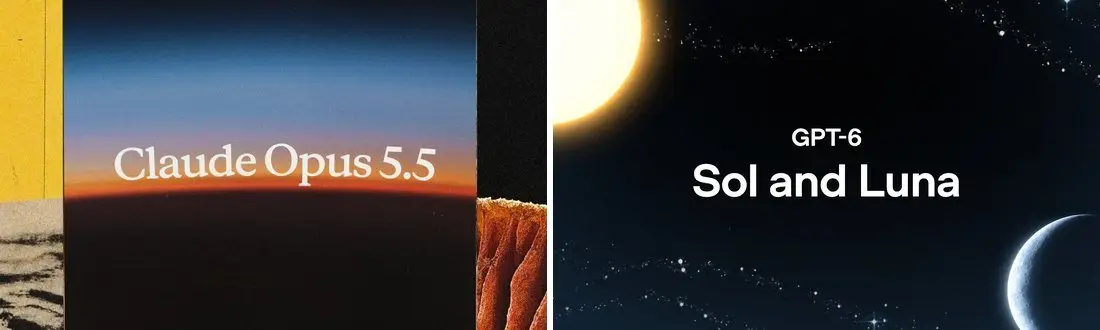
Anthropic released Claude Opus 5.5 at $4 per million input tokens and $20 per million output tokens, down from $5 and $25 for Opus 5. Cache reads, the price of re-reading context the model has already seen, fell from $0.50 to $0.20. OpenAI released GPT-6 Sol at $2 and $10, for multi-step work, and GPT-6 Luna at $0.10 and $0.50, for high-volume tasks with a clear answer. Both cost half of the versions they replace.
What the right tier saves
A worked example: reading 100,000 inbound replies a month and labelling each one (interested, not now, unsubscribe, out of office, wrong person). Say 500 tokens in and 50 out per reply. At list prices:
| Model | Monthly cost |
|---|---|
| Claude Opus 5 (last week) | $375 |
| Claude Opus 5.5 | $300 |
| Claude Sonnet 5 or GPT-6 Sol | $150 |
| Claude Haiku 4.5 | $75 |
| GPT-6 Luna | $7.50 |
| TypeSafe Jev, a classifier that returns one label from a fixed list, with no charge for output | $2.10 |
The price cut saves $75 a month on the top model. Moving the job to the tier it belongs to saves $292.50, and the two list prices are forty times apart. Two cautions keep that number honest. The models are not equal: in Artificial Analysis’s Intelligence Index, Opus 5.5 scores 58 and GPT-6 Luna 37, both at maximum effort. And the table assumes the same tokens for every model, while a model that reasons before it answers, as Opus 5.5 always does, bills that reasoning as output, so its real cost for this job is higher than shown. For a job with a fixed set of answers, what decides is whether the cheaper model is good enough, and only your own examples can tell you.
Three kinds of work, three tiers
- High volume, a fixed set of answers. Labelling replies, routing tickets, tagging leads. GPT-6 Luna, Claude Haiku 4.5, or a classifier such as Jev.
- Daily work in several steps. A first draft of a campaign, a call summary, a segment analysis, a weekly report. Claude Sonnet 5 or GPT-6 Sol.
- Long jobs where quality decides the result. A strategy document, a large migration, writing that must follow your brand guide closely. Claude Opus 5.5, and here the cache matters more than the headline price.
Where the cache cut pays
If every draft your team produces starts from the same 20,000 tokens of brand guide and product catalogue, that context can be cached and re-read cheaply. For 2,000 drafts a month with 500 tokens of new instructions and 800 tokens of output each, and the drafts run in batches so the shared context stays cached (cache writes left out), the bill on Opus 5 was $65. On Opus 5.5 it is $44, a third less. Without caching the same job costs $196, which is the bigger lesson if you are not caching yet.
The model as a replaceable part
A recent interview with Satya Nadella, CEO of Microsoft, is titled why the AI race is moving from models to products, and the conversation is with Deirdre Bosa. It frames Microsoft’s new Copilot as a bet that Microsoft does not need to own the best model if Copilot can choose among several and keep the customer’s work inside Microsoft’s apps. Our reading, from the systems we run ourselves: treat the model as a part you replace. Keep its name in one configuration setting, keep a test set of your own real examples, and the next price change becomes a one-line change and an afternoon of checking.
The one check before you switch
- Take 20 real examples from last month for the job you want to move.
- Run them through the cheaper model and through the one you use now.
- Have the person who owns the job compare the answers. Agree in advance how many disagreements you accept.
- If you are moving code from Opus 5 to Opus 5.5, read Anthropic’s migration notes first: there are four breaking changes, including that thinking can no longer be switched off and that the default effort level is now medium.
The price sheet below has every figure in this article, the two worked examples and the checklist on one page. Yours to use.